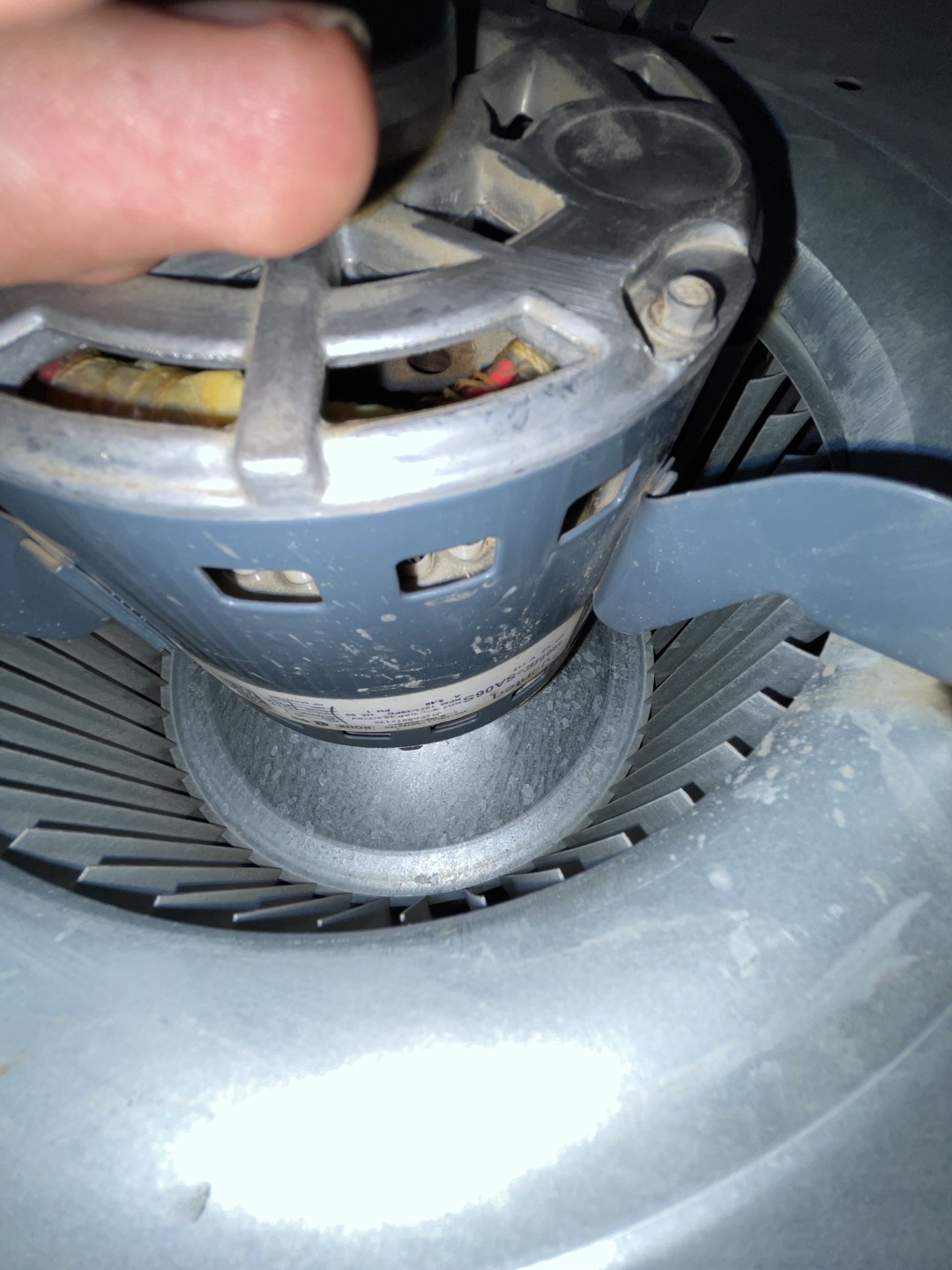
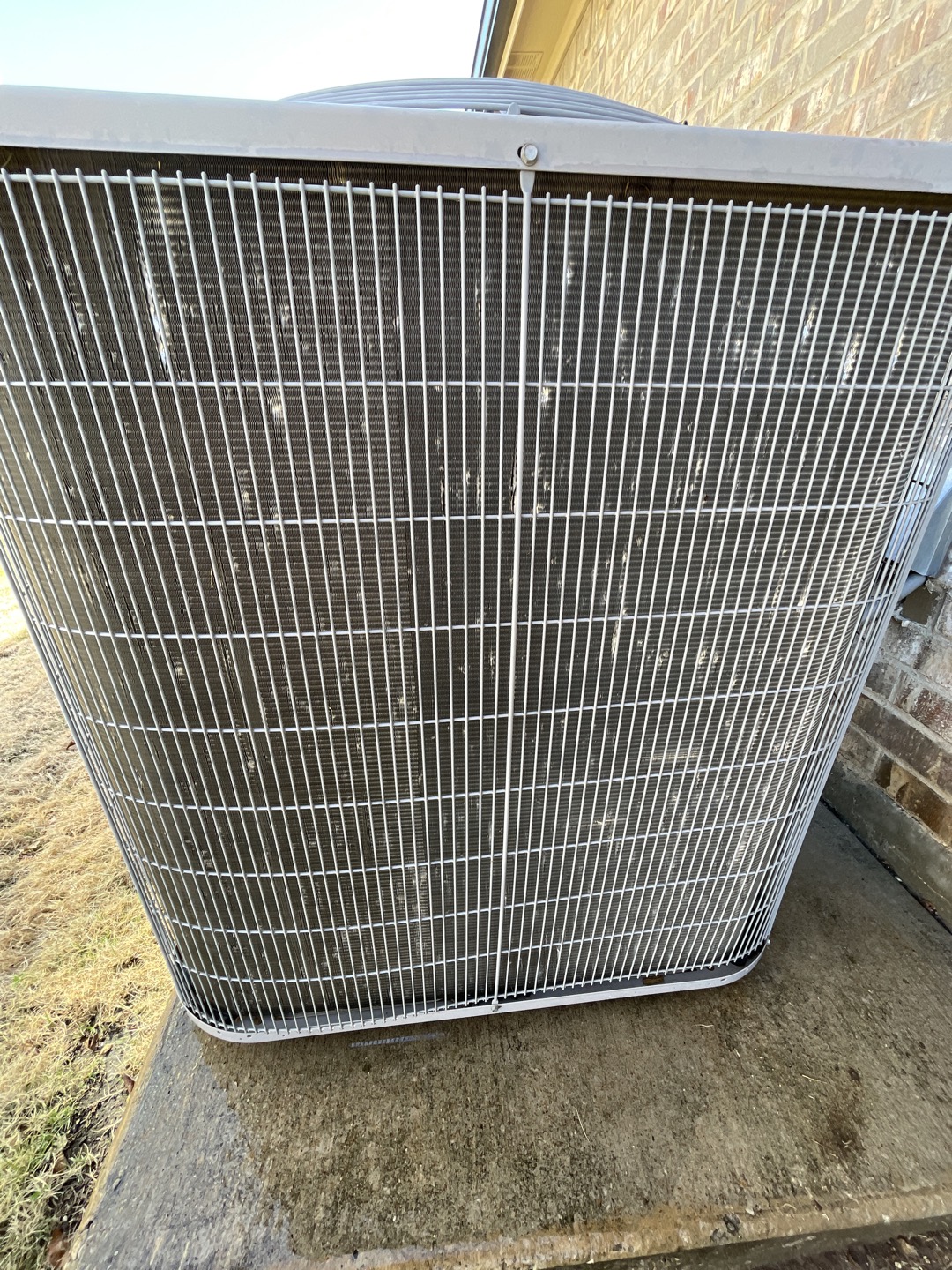
1. Rinsed condenser with water to promote heat exchange and reduce stress on system 2. Visually inspected condenser coil for debris/ dirty. 3. Inspected condenser fan motor. 4. Inspected condenser fan blades. 5. Inspected/ cleaned wiring connections. 6. Tested compressor/ condenser fan motor capacitor. 7. Checked compressor amp draw. 8. Checked condenser fan motor amp draw. 9. Inspected / replaced return filter. 10. Inspected return plenum for debris/ dirty. 11. Inspected evaporator coil. 12. Inspected blower motor/ blower wheel. 13. Checked blower amp draw. 14. Measured temperature differential from supply to return. 20 degrees measured. 15. Inspected drain lines and treated to prevent blockages Immediately noticed that the outdoor unit had taken some hail damaged during the storms. Found capacitor was testing within range but a bit low and over 5years showing signs of rust. Capacitor is liable to fail at this point in its life as it is past the expected life span. Also noticed oil